Algne artikkel on inglise keeles. Lehe navigeerimine on eestikeelne.
See artikkel ilmus algselt väljaandes Perxify. Allolev link avab algse avaldamiskoha uuel vahelehel.
PerxifyAn analysis of the Estonian startup ecosystem in 2025 and how local market dynamics influenced our global platform strategy.
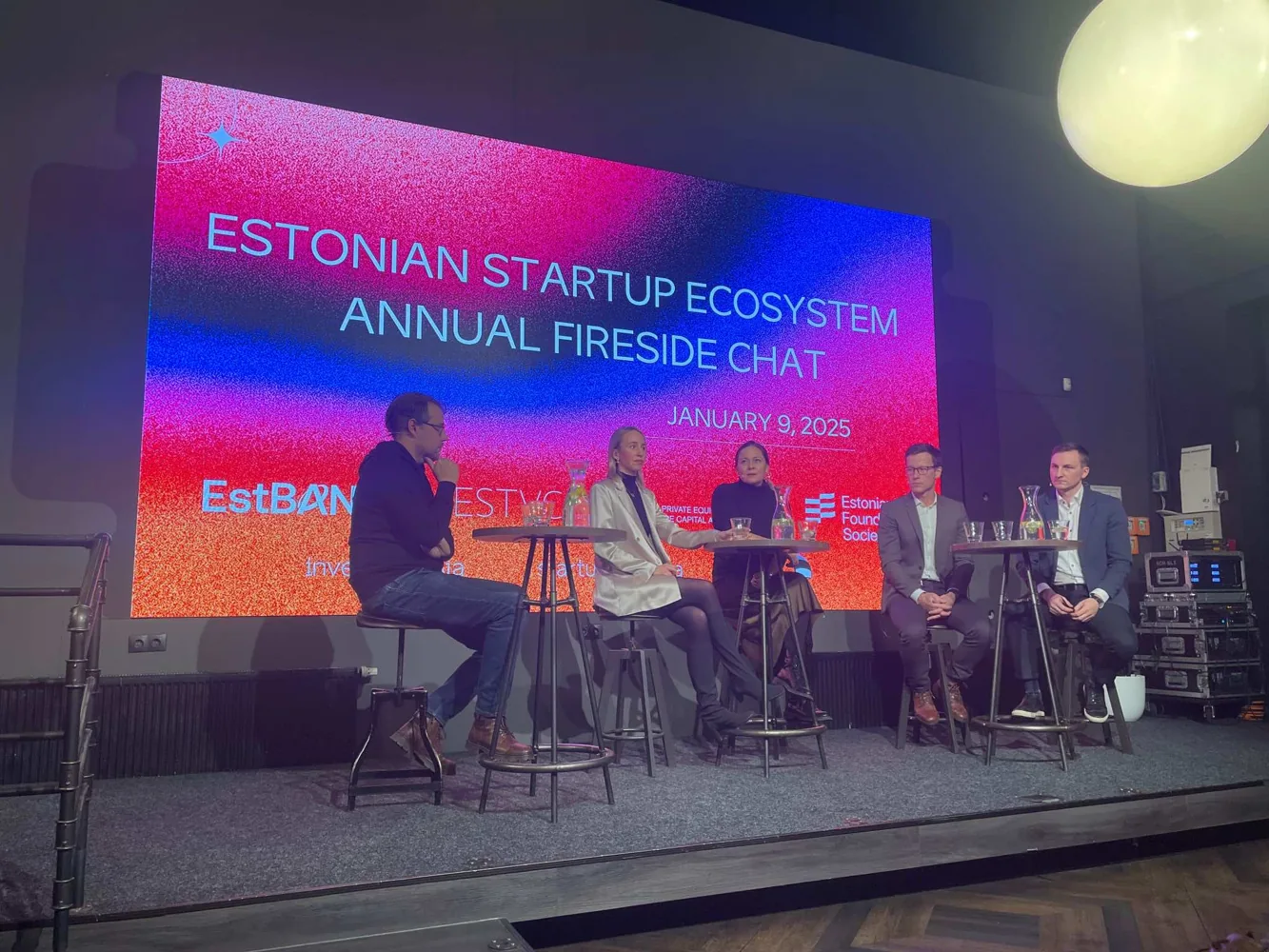
As we were building Perxify in early 2025, I found myself reflecting on the broader Estonian startup ecosystem and what the data revealed about the state of innovation in our home market. Understanding this context became crucial for our strategy, timing, and positioning as we prepared to scale our commerce cloud platform and start fundraising. This is the story of a market in transition, the opportunities it created, and the challenges that emerged as the year progressed.
What makes Estonia's technology ecosystem unique in 2025?
Estonia's tech ecosystem combines advanced digital government infrastructure with a thriving startup environment. The country's digital-first approach, established through initiatives like e-Residency and digital identity systems, creates unique opportunities for technology companies to test and scale innovative solutions.
The Investment Paradox: Capital Abundance Meets Startup Scarcity
The beginning of 2025 presented us with a fascinating paradox that would define the Estonian startup landscape for the entire year. While 2022 was the best year for startups and foreign investments in Estonia's history, and 2023 was one of the worst years globally in recent memory, 2024 has left us in an unusual position that creates both unprecedented opportunities and unexpected challenges.
According to the Estonian Private Equity & Venture Capital Association (EstVCA), over €1 billion of dry powder is waiting to be invested by Estonian institutional investors - the most capital we have ever had available in our market. This represented a massive pool of resources seeking promising startups to back, creating what should have been ideal conditions for entrepreneurs.
Simultaneously, the Estonian Business Angels Network (EstBAN) experienced a fantastic year, though investment ticket sizes had decreased somewhat. The angel investor community remained active and engaged, providing another layer of available capital for early-stage companies.
However, the founder side of the equation told a very different story. Estonian Founders Society statistics revealed that 8% of all startups ever founded in Estonia were closed in 2024 - a significant consolidation that reflected the challenging market conditions of the previous years. Even more striking was the fact that only around 150 startups were founded in 2024, indicating that deal flow was at some of the lowest levels seen in years.
This created an unprecedented situation: abundant capital chasing a limited number of quality opportunities. For established startups with strong fundamentals and clear market traction, this represented a golden opportunity to access funding with less competition than in previous boom years. For the broader ecosystem, however, it raised questions about the innovation pipeline and long-term sustainability. As we detail in our story of fifteen years of journey leading to Perxify, understanding this market context was crucial for timing our own fundraising and positioning within the Estonian startup ecosystem.
What investment opportunities exist in Estonia's technology sector?
Estonia offers investment opportunities in digital identity, fintech, e-governance solutions, and AI-powered platforms. The country's position as a digital leader creates opportunities for companies building infrastructure for the future of digital commerce and government services.
The Tech Sector Recovery: Signs of Renewed Growth
As we process these investment dynamics, encouraging data have emerged about the broader Estonian tech sector, providing crucial context for our market analysis. The fourth quarter of 2024 showed that Estonian tech companies were beginning to see significant year-over-year growth in taxable turnover, effectively ending the downward cycle that had started in 2021.
This recovery was particularly significant because it suggested that the worst of the tech downturn was behind us. The sector's fundamentals were showing clear signs of improvement across multiple metrics, painting a picture of sustainable growth rather than temporary fluctuations.
Employment in the tech sector had remained remarkably stable throughout the downturn, maintaining approximately 16,000 employees across the last five quarters. This stability was crucial because it meant that the talent base remained intact and available for both existing companies looking to scale and new startups entering the market.
More encouragingly, the estimated average gross salary in the tech sector had grown to €3,867, representing a 7% year-over-year increase. This salary growth indicated that demand for tech talent was not only stable but increasing, suggesting confidence in the sector's prospects.
The improved fourth-quarter revenue numbers enabled analysts to revise their estimates of the tech sector's value-add upward for 2024. The sector was now estimated to contribute €1.44 billion, or 3.7% of the country's GDP - a substantial portion that demonstrated just how central technology had become to Estonia's economic success.
The sector's full-year taxable revenue for 2024 reached €4.15 billion, representing 13% year-over-year growth. While this growth rate was still modest compared to the explosive growth of previous boom years, it is significantly better than the pessimistic projections that had been circulating just months earlier. This recovery builds on Estonia's strong foundation in digital innovation, as we explore in our analysis of Estonia's digital leadership in pioneering future digital identity, which positions the country as a global leader in digital infrastructure and innovation.
What advantages does Estonia offer to technology startups?
Digital Government Infrastructure - Advanced e-governance systems provide testing ground for digital solutions
EU Market Access - Gateway to European Union market with favorable business regulations
Tech-Savvy Population - High digital literacy and early adoption of new technologies
Startup-Friendly Policies - Government support for innovation and entrepreneurship initiatives
The Market Leaders: Understanding the Competitive Landscape
The list of Estonia's largest tech companies, based on 2024 tax data, provided valuable insights into the market structure and competitive dynamics that would influence our strategic thinking. Bolt Operations led the pack with €1.414 billion in revenue, demonstrating that Estonian companies can indeed scale to truly global levels and compete with international giants.
Pipedrive's €282 million in revenue showed the continued strength of Estonia's SaaS sector, while Veriff's €102 million highlighted the success of identity verification and compliance technology. Companies like Yolo (€80 million), pawaTech (€68 million), and Dynatrace Estonia (€63 million) filled out a diverse ecosystem that spanned multiple technology verticals.
The presence of Microsoft Development Centre Estonia, formerly the Skype operation, with €59 million in revenue, demonstrates the continued importance of international tech companies choosing Estonia as a development hub. This international presence provided both validation of Estonia's tech capabilities and a source of experienced talent that often spun out to create new startups.
This market structure is particularly relevant for Perxify because it showed that Estonian companies can successfully scale in the commerce and business software space. The success of companies like Pipedrive proved that there is a path from an Estonian startup to a global software leader, providing both inspiration and a roadmap for our scaling ambitions with our commerce cloud platform.
The Web3 Renaissance: Finding Opportunity in Emerging Technologies
While the broader startup ecosystem is experiencing a lull in new company formation, the Web3 and blockchain space is showing signs of renewed activity that are particularly relevant to Perxify's positioning. This Renaissance is crucial for us because our platform is fundamentally enabled by blockchain technology, even though we deliberately hid that complexity from end-users.
The renewed interest in blockchain applications means that investors and customers are becoming more receptive to solutions that leverage these technologies, provided they deliver clear business value rather than just technological novelty. This shift in perception is essential for companies like ours that use blockchain as an enabling technology rather than as the primary value proposition.
The key insight is that the market is maturing beyond the speculative phase of Web3 adoption toward practical applications that solve real business problems. This created opportunities for companies that can bridge the gap between cutting-edge technology and mainstream business needs.
For Perxify, this meant positioning ourselves not as a "crypto company" but as a commerce platform that leverages blockchain technology to enable new capabilities, such as actual digital ownership, transparent supply chains, and programmable business logic. This positioning enables us to capitalize on the Web3 momentum while appealing to mainstream business customers who prioritize outcomes over underlying technology.
Strategic Implications for Fundraising and Growth
Understanding this market context became crucial for developing our fundraising strategy and growth plans. The combination of abundant capital and limited competition created a unique window of opportunity that we needed to capitalize on effectively.
The availability of over €1 billion in institutional capital means that well-positioned startups can access larger funding rounds with potentially better terms than during more competitive periods. However, this also means that investors can be more selective, focusing on companies with strong fundamentals, clear market traction, and experienced teams.
The recovery in the tech sector provided validation that the market conditions are improving and that technology investments are likely to see positive returns. This macro trend makes it easier to tell a compelling growth story to potential investors who have been cautious during the downturn.
The low number of new startup formations means that established companies with proven traction can capture a larger share of investor attention and market opportunity. This is particularly advantageous for companies like Perxify, which had spent the downturn building strong foundations and is now ready to scale as conditions improve.
The 7% growth in tech sector salaries indicates that the talent market is healthy and competitive, which is essential for our ability to attract and retain the engineering talent we need to execute our ambitious product roadmap.
The Broader European Context and Competitive Dynamics
While our analysis focused on Estonia, the trends we are observing are part of broader European patterns that influenced our strategic thinking. Many European tech ecosystems are experiencing similar dynamics - recovering from the 2021-2023 downturn but with lower startup formation rates and significant available capital.
This creates opportunities for Estonian startups to compete not just locally but across European markets. Our platform approach and focus on serving brands across multiple countries position us well to capitalize on these broader trends and access larger addressable markets, especially as we see a growing demand for Nordic e-commerce platform solutions.
The European regulatory environment is also evolving in ways that can benefit companies like ours. The increasing focus on data privacy, digital sovereignty, and fair competition have created opportunities for platforms that give users more control over their data and enable more transparent business relationships.
The Importance of Data-Driven Decision Making
One of the most valuable aspects of this market analysis was that it grounded our strategic decisions in actual data rather than relying solely on sentiment or intuition. Organizations such as the Estonian Founders Society, EstVCA, and EstBAN provided crucial market intelligence, helping us understand our competitive environment and make informed decisions about timing, positioning, and resource allocation.
This data-driven approach became central to our thinking about business strategy throughout 2025. We aren't just building based on what we thought the market needed - we are constantly analyzing market conditions, competitive dynamics, and investment trends to inform our decisions and validate our assumptions.
The availability of this market data also helps us communicate more effectively with investors, customers, and team members. Being able to point to concrete trends and statistics makes our strategic narrative more compelling and credible.
The Psychology of Optimism in Uncertain Times
Building a startup requires maintaining optimism even when market conditions are uncertain or challenging. The data we analyzed in early 2025 was mixed, with positive trends in some areas and concerning trends in others, which required us to balance a realistic assessment with the confidence necessary to execute ambitious plans.
The key insight is that sometimes optimism is as much a strategic choice as an emotional response. When you're building a startup, you have to believe that market conditions will support your success, even when the data is mixed. The challenge is striking a balance between the necessary optimism and a realistic assessment of challenges and opportunities.
For Perxify, this meant acknowledging the challenges in the broader startup ecosystem while focusing on the specific advantages our positioning and timing provided. We cannot control macroeconomic market conditions, but we can control how we respond to them and position ourselves to benefit from emerging opportunities.
The Community Advantage: Leveraging Ecosystem Strengths
One of Estonia's key advantages is the strength of its startup community and support infrastructure. Organizations such as the Estonian Founders Society, Startup Estonia, the Estonian Web3 Chamber, and LIFT99 provided valuable resources, connections, and knowledge-sharing opportunities that help startups navigate challenges and identify opportunities.
The collaborative nature of the Estonian startup ecosystem also means that success stories like Bolt, Pipedrive, and Veriff create positive spillover effects for the entire community. Their success attracts international attention, investment, and talent, which benefit all Estonian startups.
Navigating Challenges and Opportunities
While Estonia maintains significant advantages, including programs such as e-residency and the Startup Visa, as well as a strong foundation of successful companies - the ecosystem faces real challenges. Regulatory uncertainty in emerging technologies, conservative investor attitudes toward early-stage funding, and the need for more sophisticated funding mechanisms for capital-intensive sectors, such as AI and defense technology, all require attention.
For companies like Perxify, operating at the intersection of traditional commerce and emerging technologies means navigating not just market challenges but also evolving regulatory frameworks. Our strategy has been to think European from day one, positioning ourselves to take advantage of the best business environments across the region while contributing to our home ecosystem.
The Path Forward
This market analysis confirmed several key insights that will guide our journey. Our timing is advantageous - we're entering the market during a recovery phase with abundant capital and limited competition. As a Web3-enabled platform, we're well-positioned to benefit from renewed interest in blockchain applications, provided we focus on business value rather than technological novelty.
Most importantly, the data reinforced that success requires strong fundamentals and clear market traction. In an environment with abundant capital but selective investors, companies must demonstrate actual progress toward sustainable business models, not just potential.
For Perxify, 2025 represents the transition from building to scaling, from potential to performance. Understanding this market context enables us to navigate that transition more effectively and position ourselves for sustainable growth in an increasingly competitive environment. The story of Estonia's startup ecosystem in 2025 is ultimately about the importance of strategic focus, decisive action, and continuous adaptation - lessons that prove valuable not just for individual company success but for contributing to the broader innovation community that supports us all.

Praktiline toote-, äri- ja AI juhtimine tegutsevate ettevõtete juhtidele. Agentkaubanduse töö OfferSignali kaudu.
Sanderist