Algne artikkel on inglise keeles. Lehe navigeerimine on eestikeelne.
See artikkel ilmus algselt väljaandes Medium. Allolev link avab algse avaldamiskoha uuel vahelehel.
Medium“Read my emails and tell me which customer I should follow up with next.”
Instead of adopting a sales tool, give the task to a machine. With the right access and data, it reviews emails, finds unfinished conversations, and prepares next steps.
This is where the software market gets interesting.
It’s no longer just about better or cheaper software. Some tasks may not need a separate tool at all.
One-off analyses. Image editing. Extracting data. Building small tools. More of this can go to Manus AI without adopting another service each time.
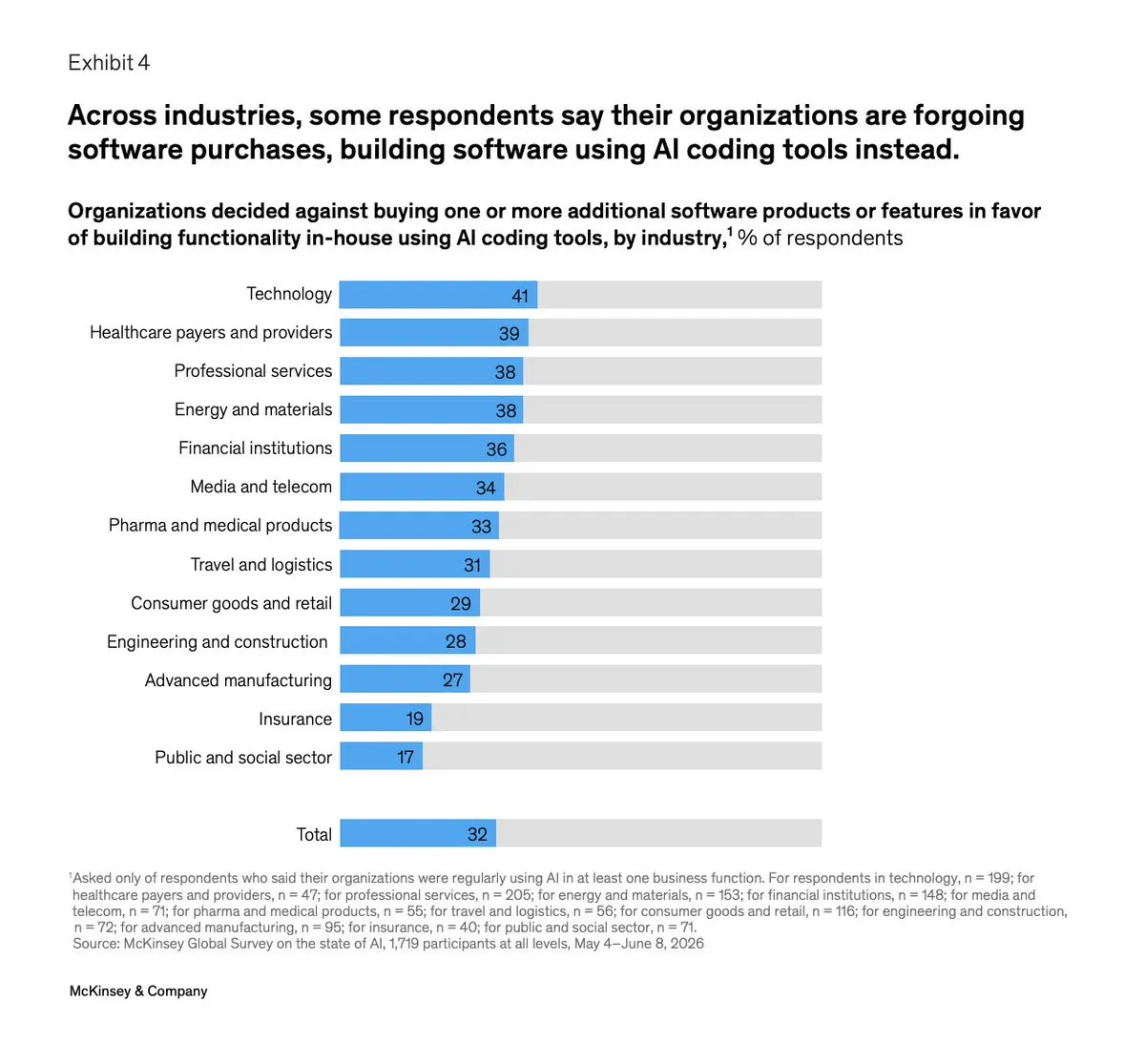
In McKinsey’s survey, 32% of respondents at organisations regularly using AI said their firms had skipped buying at least one software product or feature. They could build it in-house with AI.
Not throwing out all their software. Just purchases not made. Enough to start changing the market.
That puts pressure on the old model: fund development yourself, recover the investment through subscriptions. If the same features become free or cheaper, monetisation and funding need rethinking.
Building software is only part of this.
Many small firms have discussed adopting a CRM for years. Work still happens in email, an industry-specific tool, and Google Sheets. Implementation has gone nowhere.
Now an agent can do some of that work where the information already lives. Without first retraining everyone on another system.
This changes what people pay for.
Work done. Reliable information. Compute. A continuously running service. Not necessarily access to another tool.
Salesforge offers a sales agent. Pactum AI automates procurement negotiations. Cybersecurity still needs continuous monitoring and response, not code written once.
Some services move into the background. Users request work in familiar tools without knowing what runs underneath. They don’t all need to learn to build agents first.
Yesterday, I came across someone who had used Claude to build a shop for her used books. No Shopify. No Stripe. €120 worth of books sold on day one towards renovating her children’s room.
She needed a shop. Not everything else yet.
BUT!
Free code doesn’t mean free upkeep. Security, maintenance, and integrations still matter. Paying for a good existing solution can make sense. Especially in manufacturing, where replacing one connected system is a major project.
Incumbents can survive and grow. Cheaper, simpler tools can gain customers. The market is still changing.
What can you try now?
Pick one recurring task: unanswered emails, sales analysis, or extracting data from files.
Give your existing AI tool a clear output and sources. For email, start with limited read access, not automatic sending.
Review the result. Was the work done? Did prompting and corrections take less time? Is there still a reason to buy another tool?
That question matters more now.
The alternative is no longer just another tool.
It’s an agent doing the work for you in the background.
And that’s why the idea that SaaS is dying keeps spreading.

Praktiline toote-, äri- ja AI juhtimine tegutsevate ettevõtete juhtidele. Agentkaubanduse töö OfferSignali kaudu.
Sanderist