Algne artikkel on inglise keeles. Lehe navigeerimine on eestikeelne.
See artikkel ilmus algselt väljaandes Medium. Allolev link avab algse avaldamiskoha uuel vahelehel.
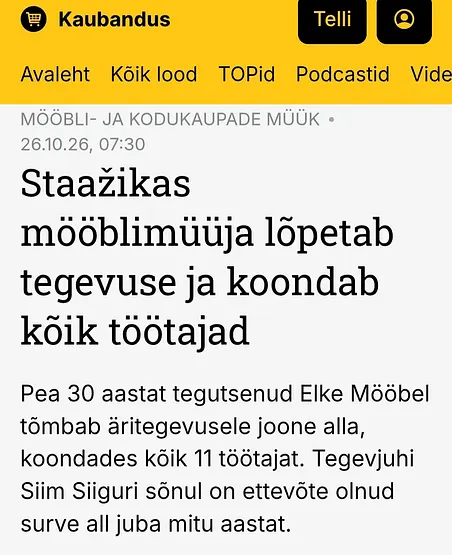
MediumLast week, I heard rumours that one of Estonia’s oldest furniture showrooms was closing. Now it’s confirmed: ELKE Mööbel is shutting down.
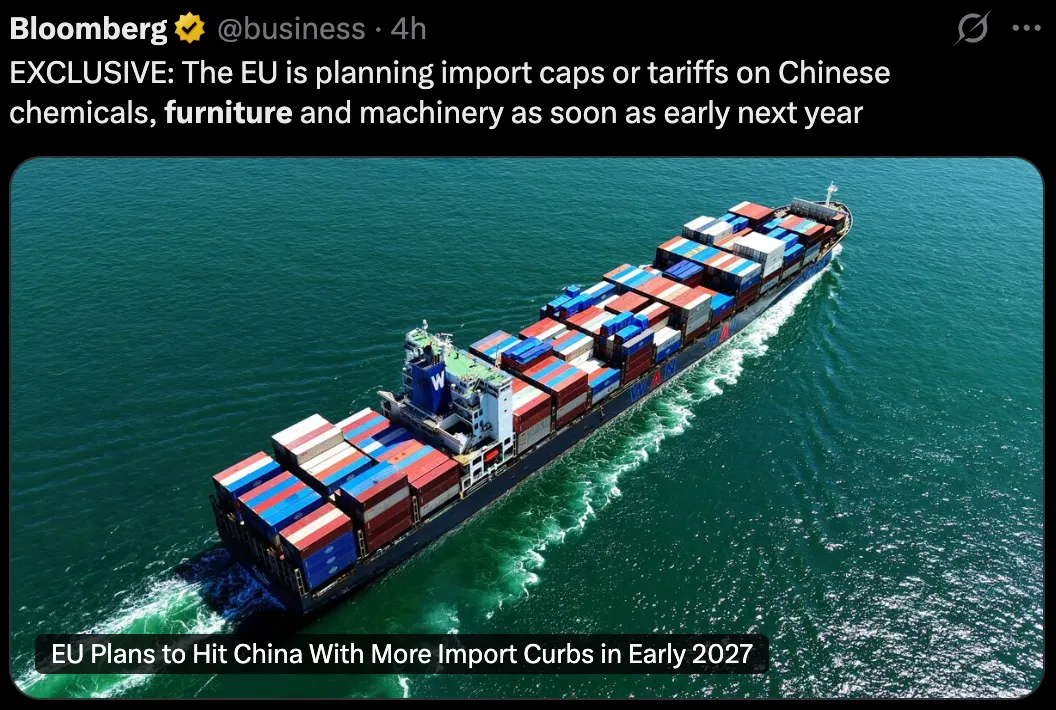
This morning, Bloomberg News reported that the EU is preparing to impose import restrictions on Chinese chemicals, furniture, and machinery. The EU could present measures in Q1 2027.
European furniture manufacturers have been sounding the alarm.
Italian furniture exports: down 17.7% in the first seven months of 2026.
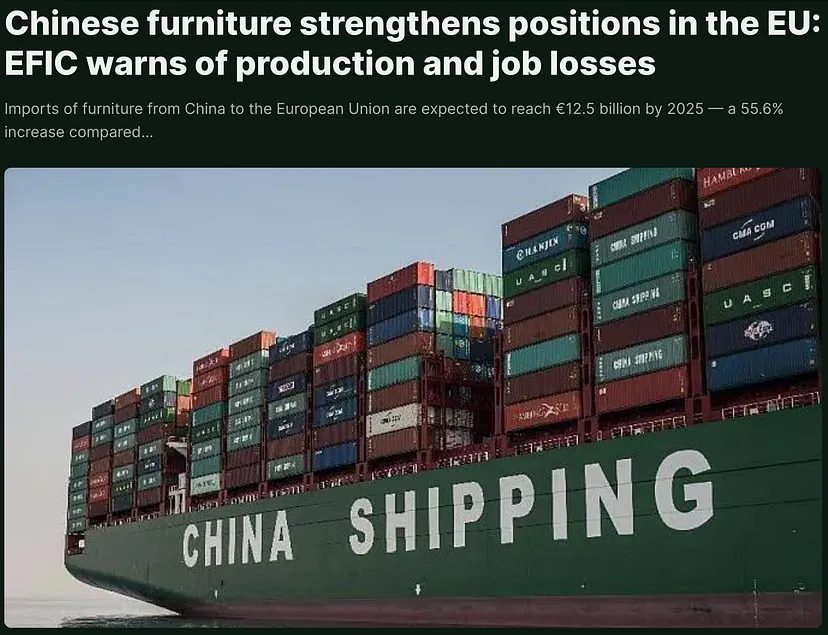
Chinese furniture imports into the EU: up over 55% between 2019 and 2025. From around €8B to €12.5B. Only within Belgium: up 90% between 2020 and 2025.
The pressure on European producers and retailers is real.
The obvious response: why restrict access to affordable products? Just make better products for less.
There’s some truth in that. But EU furniture manufacturing means around 1 million jobs, 130,000 businesses, and over €100B in turnover. Even after €20B has already flowed out of Europe.
Closing the market is not a good answer. Competition pushes businesses to improve. Yet should everyone play by the same rules?
Even if restrictions buy time, they won’t do the next job for us.
How do we survive?
Yes, survive. Buyers have tools in their pockets to compare offers beyond their hometown. ChatGPT. Claude. Grok. Muse. Increasingly, agents are doing the searching for them.
No, they don’t always find the best deal. I’ve written about that too. But hoping they keep failing is a poor business strategy.
If your offer never reaches the comparison, buyers cannot consider it. Even with a better price, faster delivery, or a better custom solution.
And if a simple answer takes three days, they may have bought elsewhere.
So, review how work moves through your business.
Get product data right. Make it machine-readable. Dimensions. Variants. Prices. Actual availability and lead times.
Respond faster. Make sure your sales team knows what can be customised and where the limits are. Preparing a quote should not take three phone calls.
Make your value clear. Advice. Customisation. Installation. Delivery. Help when something goes wrong.
Winning does not always mean being cheapest.
Fortunately, more work can now be requested in plain language. Less memorising menus. More doing the work.
BUT! Another AI subscription won’t fix the business.
Understand the workflow. What buyers and their agents need. Where automation helps. Where a person reviews and approves.
Learn it yourself. Or work with a partner who connects your data, processes, and sales.
For me, the question is not just whether the EU restricts imports. It is whether our businesses actually get better.
Even good, ambitious, long-established businesses that don’t make this change will close in the coming years. Just like ELKE today. A long history does not guarantee the next customer.
Changing how your business actually works needs to start now.
Selle artikli pildid

Praktiline toote-, äri- ja AI juhtimine tegutsevate ettevõtete juhtidele. Agentkaubanduse töö OfferSignali kaudu.
Sanderist