This article was originally published on Perxify. The link below opens the original publication in a new tab.
PerxifyThe story of how we went from needing a website to having a live, professional headless commerce frontend in just one hour using AI assistance - and what this means for the future of startup development.
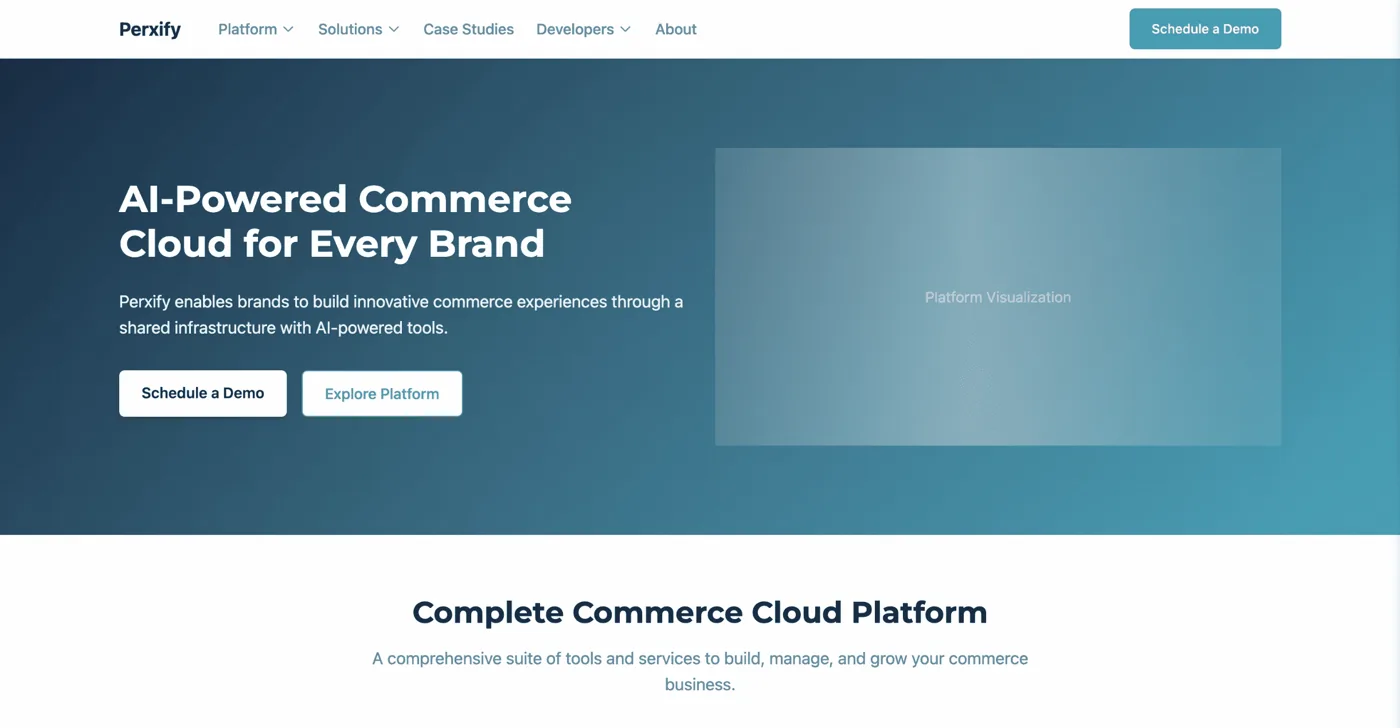
When we started building Perxify, we made a deliberate decision to focus entirely on product development before investing time in branding, naming, or websites. Almost a year later, with an alpha launch approaching, it was finally time to create our first proper website. What happened next surprised even me - with AI assistance, we went from concept to live website in just one hour. This experience highlights the power of AI-driven e-commerce development for modern startups.
How fast can AI build a professional website?
AI-powered development can create a complete professional website in under one hour, including design, content generation, responsive layout, and basic functionality. This represents a dramatic acceleration from traditional development timelines that typically require days or weeks.
The Evolution of Our Identity
When Alvar and I first started building what would eventually become Perxify, we had a clear philosophy about priorities. We decided to spend time on branding, naming, and websites until we had built a functional product and onboarded our first customers. This approach may seem counterintuitive to some entrepreneurs who focus heavily on brand identity from the outset. Still, for us, it was the right way to ensure we were building something people wanted before investing in marketing it.
Initially, we referred to the project as "Project Aurora Borealis" and began building. The name was temporary, almost placeholder-like, but it captured something about the ambitious and somewhat mysterious nature of what we were trying to create. We were building in the emerging space of tokenized commerce and blockchain-based loyalty programs, technologies that felt as ethereal and beautiful as the northern lights themselves.
As the project evolved and became more concrete, we realized we needed a proper company name. We decided to combine our names to create "Alder Solutions," which felt professional and established while still maintaining a personal connection to the founders.
It was only when we needed a domain to host our first demo that we finally settled on "Perxify.com." The choice was driven by several practical considerations: its relevance to our theme of perks and rewards, its shortness and memorability, and the availability of the coveted.com extension. The name "Perxify" captured the essence of what we were building - a loyalty platform that would transform how businesses create and manage customer perks and rewards through innovative technology.
This evolution of our identity - from Project Aurora Borealis to Alder Solutions to Perxify - reflected our journey from an abstract concept to a concrete product to a market-ready solution. Each name change marked a significant milestone in our development process, representing our growing understanding of what we were building and for whom we were building it.
The Moment We Needed a Real Website
Almost a year after we started building, everything was coming together. We made numerous minor adjustments to our focus as we gained a deeper understanding of the market and refined our product vision. We had conducted numerous customer meetings that helped us understand what businesses truly needed from a tokenized commerce platform. We had written countless lines of code, building out the core functionality that would power our platform. Most importantly, we were approaching our alpha launch, which meant we needed to start thinking seriously about how we would present ourselves to the world.
It was at this moment that we realized we needed to create our first proper sales materials. Up until this point, we had been operating with basic demos and informal presentations, which worked fine for early customer discovery and product development. However, as we prepared to launch and start serious sales conversations, we needed professional materials that could effectively communicate our value proposition and capabilities.
The centerpiece of these sales materials would be a proper website. We needed something that could serve multiple purposes: educate potential customers about our platform, demonstrate our capabilities and professionalism, provide a central hub for all our marketing efforts, and support our sales process with compelling content and clear calls to action.
However, we faced a significant challenge. Our developers were completely focused on building the product itself, working on the core functionality that would power our platform. We didn't have any outside funding yet, which meant we couldn't hire external resources to build the website. The responsibility for creating our web presence fell entirely on me, and I needed to figure out how to create a professional website without taking our development team away from their critical product work.
This constraint turned out to be a blessing in disguise, as it forced me to explore new approaches and ultimately led to one of the most surprising and efficient website development experiences I've ever had. As we detail in our analysis of marketing in the age of AI, these AI-powered approaches are transforming how businesses approach content creation, design, and digital marketing across all industries.
The Traditional Approach We Almost Took
Drawing from our experience during our marketing strategy and execution agency days, I initially planned to follow the traditional website development process that had served us well in the past. This approach involved several distinct phases, each requiring significant time and effort but ultimately producing high-quality results.
The first step would have been to create a comprehensive website structure, mapping out all the necessary pages, the navigation flow between them, and the overall information architecture. This phase typically involves creating detailed wireframes, user journey maps, and content outlines that serve as the blueprint for all subsequent development.
Next, I would have focused on drafting all the content for each page, ensuring that our messaging was clear, compelling, and consistent across the entire site. This content development phase is often the most time-consuming part of the process, as it requires in-depth consideration of value propositions, target audiences, and how to communicate complex technical concepts in an accessible manner.
The third phase would have involved designing the layout and visual elements, as well as creating a design system that reflected our brand identity and provided an excellent user experience. This includes everything from color schemes and typography to layout grids and interactive elements.
Ultimately, I would have found a simple template that could accommodate all of this content and customized it to meet our design requirements. This approach had worked well for us in the past and typically produced professional results, though it usually took several weeks to complete correctly.
However, this time, I had something different at my disposal - AI assistants that could accelerate and enhance this entire process. Instead of following the traditional approach, I decided to experiment with using AI to help with the website development, starting with the initial structure and content development phases.
The AI Experiment That Changed Everything
Instead of following the traditional website development process, I decided to experiment with AI assistance. I had access to both Grok AI and Manus AI, and I wanted to see how they could help with the website creation process. To give them the best possible foundation to work with, I provided them with ten previously drafted documents about Perxify, including our investment memo, sales deck, and other strategic materials that captured our vision, value proposition, and market positioning.
I gave both AI assistants the same prompt, asking them to create a draft structure for our website based on these foundational documents. What happened next was fascinating and revealed the different strengths and approaches of each AI system.
Grok AI delivered precisely what I expected - a solid, professional website structure that adhered to conventional best practices and organized our content in a logical, predictable manner. It was what I would have created myself if I had followed the traditional approach, which was reassuring but not particularly surprising. The structure was competent and provided a solid foundation for further development.
Manus AI, however, completely surprised me with the depth and comprehensiveness of its response. Instead of just providing a basic website structure, it delivered a thorough analysis of all ten documents, extracting key themes, identifying target audiences, and understanding the nuances of our positioning. More impressively, it provided detailed brand guidelines that captured the essence of our identity, comprehensive user journeys that mapped out how different types of visitors would interact with our site, and complete content drafts for each section that were remarkably well-written and on-brand.
The quality and depth of Manus AI's initial response were so impressive that it sparked my curiosity about what else it might be capable of. Like any technology enthusiast, I wanted to push the boundaries and see how far this AI assistance could take us in the website development process. As we explore in our analysis of AI beyond tools and transformative applications, these AI capabilities represent a fundamental shift in how we approach creative and technical work, enabling new levels of productivity and innovation.
Pushing the Boundaries of AI-Assisted Development
Encouraged by the quality of Manus AI's initial response, I decided to push further and see what else it could accomplish. I asked if it could also provide layout recommendations based on the content it had created and help refine some of the messaging to make it even more compelling.
Once again, Manus AI exceeded my expectations. It provided detailed layout suggestions that took into account modern web design principles, user experience best practices, and the specific needs of our target audience. The layout recommendations included suggestions for visual hierarchy, content organization, call-to-action placement, and responsive design considerations that would ensure the site worked well across all devices.
The AI also provided thoughtful refinements to the messaging, improving clarity, strengthening value propositions, and ensuring consistency across all sections of the site. These weren't just minor tweaks - they were substantial improvements that made the content more engaging and persuasive.
But then something truly remarkable happened. After providing the layout recommendations and message refinements, Manus AI asked me a question that I wasn't expecting: "Would you like me to turn this into code and create a working website?"
I was stunned. "What is this magic?" I thought to myself. The idea that an AI could take the strategic thinking, content development, and design work we had just completed and implement it as functional code seemed almost too good to be true. But I was curious enough to say yes and see what would happen.
What followed was one of the most impressive demonstrations of AI capability I had ever witnessed. Manus AI didn't just create basic HTML and CSS - it built a fully functional, modern website using React and other contemporary web technologies. The code was clean, well-organized, and followed current best practices for web development.
From Concept to Live Website in One Hour
Thirty minutes after Manus AI began generating the code, we had a live website. The speed of this transformation was mind-blowing. In the span of half an hour, we had gone from strategic documents and content drafts to a fully functional website that looked professional and effectively communicated our value proposition.
The website wasn't perfect - it had some minor bugs and formatting issues that needed to be addressed. However, the core functionality was there, the design was solid, and the content was compelling. Most importantly, it provided a strong foundation that could be refined and improved rather than starting from scratch.
The debugging process was remarkably efficient as well. After identifying the minor issues with the initial version, I provided Manus AI with two additional prompts describing the problems that needed to be fixed. Within minutes, the AI had identified the root causes of the issues and provided corrected code that resolved all the problems.
The total time investment was extraordinary when compared to traditional website development approaches. It took three prompts and one hour to complete the first functional version of the website and another hour or so to finalize all the details and ensure everything was working perfectly. This represented a time savings of weeks compared to the traditional approach while still producing a high-quality result.
It's essential to recognize that this efficiency was built upon months of prior work. The ten documents I provided to the AI represented extensive strategic thinking, market research, and content development that had been refined over many months. The AI didn't create this foundational work - it synthesized and implemented it in ways that would have taken much longer using traditional methods.
However, even accounting for this foundational work, the speed and quality of the AI-assisted website development were remarkable. We condensed what would typically be a multi-week project into a few hours of focused work while maintaining professional quality and strategic coherence.
What steps are involved in AI-powered website development?
-
Requirements Analysis - AI analyzes business needs and target audience requirements
-
Design Generation - Automated creation of responsive layouts and visual elements
-
Content Creation - AI-generated copy, images, and multimedia content
-
Code Implementation - Automated coding with modern frameworks and best practices
-
Testing and Optimization - Automated testing for functionality and performance optimization
The Technical Magic Behind the Scenes
What made this AI-assisted website development so impressive wasn't just the speed - it was the sophistication of what the AI was able to accomplish. Manus AI didn't just create a basic static website; it built a modern, responsive web application using current best practices and technologies.
The AI chose to implement the website using React, a popular JavaScript framework that enables the creation of dynamic, interactive web applications. This was a sophisticated choice that demonstrated an understanding of modern web development practices, as well as the need for scalability and maintainability.
The code structure was clean and well-organized, with proper component separation, consistent naming conventions, and precise documentation. The AI had created a codebase that would be easy for our development team to understand, modify, and extend as needed. This attention to code quality was awe-inspiring, as it demonstrated that the AI understood not only how to make something work but also how to make it maintainable and professional.
The responsive design implementation was also noteworthy. The AI had created a website that worked seamlessly across desktop, tablet, and mobile devices, with appropriate layout adjustments and optimizations for each screen size. This level of responsive design typically requires significant expertise and testing to implement correctly.
Perhaps most impressively, the AI had integrated modern web performance optimizations, including efficient loading strategies, optimized images, and clean CSS that minimized load times and provided an excellent user experience. These technical details are often overlooked in rapid development projects, but they're crucial for creating a professional web presence.
The AI had also implemented proper SEO foundations, including relevant meta tags, structured data, and semantic HTML, which would help search engines understand and effectively index our content. This attention to technical SEO details demonstrates a comprehensive understanding of what makes a website successful, extending beyond just visual design and functionality.
The Strategic Impact of Rapid Development
The ability to create a professional website in just one hour had implications that went far beyond just saving time. This rapid development capability fundamentally changed our approach to web presence and marketing materials, opening up new possibilities for how we could respond to market opportunities and customer needs.
First, it dramatically reduced the barrier to creating professional marketing materials. In the past, the time and resource investment required for website development meant that we had to be very strategic about when and how we updated our web presence. With AI assistance, we could iterate much more rapidly, testing different messaging approaches, updating content based on customer feedback, and responding quickly to market changes.
Second, it allowed us to maintain focus on our core product development while still creating the necessary marketing materials for our alpha launch. Instead of diverting development resources or delaying our launch timeline, we were able to create a professional web presence without impacting our primary objectives.
Third, it demonstrated the potential for AI to serve as a force multiplier for small teams and resource-constrained startups. We were able to accomplish something that would typically require hiring external contractors or dedicating significant internal resources, using only AI assistance and a few hours of focused work.
The quality of the result was also strategically important. This wasn't just a quick-and-dirty solution that we would need to replace later - it was a professional website that effectively communicated our value proposition and could serve as the foundation for our future marketing efforts. The AI had created something that was immediately useful and would continue to serve our needs as we scaled.
Perhaps most importantly, this experience gave us confidence in AI-assisted development approaches that could be applied to other aspects of our business. If AI could help us create a professional website in one hour, what other business processes could be accelerated and improved through intelligent automation?
Preparing for Launch and Future Development
With the website essentially complete, we still had a few final steps to prepare for our alpha launch. Some pages need to be temporarily hidden as they were prepared for future features and capabilities that have not yet been released to the public. This is a common practice in startup website development, where you want to create a comprehensive site structure but only reveal sections that are immediately relevant to your current stage of development.
The next step was to have our development team house the website on our servers, ensuring that we had complete control over hosting, security, and performance. This migration from the AI-generated version to our production environment was straightforward, thanks to the clean, professional code that Manus AI had created.
Looking ahead, the website would serve as the foundation for our marketing efforts as we move toward alpha launch and beyond. We now had a professional web presence that could support our sales conversations, provide information to potential customers, and serve as a central hub for all our marketing activities.
The modular, well-structured code that the AI had created would also make it easy for us to iterate and improve the website over time. As we learned more about our customers and refined our messaging, we could easily update content, add new sections, and enhance functionality without having to start from scratch.
Most importantly, this experience gave us a new tool in our startup toolkit. We now know that AI could serve as a powerful assistant for rapid development projects, allowing us to create professional materials quickly and efficiently when needed. This capability would be valuable not only for website development but also for creating sales materials, documentation, and other business assets as we continue to grow.
Reflections on AI-Assisted Development
This experience with AI-assisted website development provided several important insights about the current state and future potential of artificial intelligence in business applications. The most obvious lesson was about efficiency - the ability to compress weeks of traditional development work into a few hours of AI-assisted work represents a fundamental shift in how quickly businesses can create professional materials and respond to market opportunities.
However, the efficiency gains were only part of the story. The quality of the AI's output was equally impressive, demonstrating that AI assistance doesn't necessarily mean compromising on professionalism or sophistication. The website that Manus AI created was not just fast - it was genuinely good, incorporating modern best practices and thoughtful design decisions that would have been impressive even if they had taken weeks to create.
The experience also highlighted the importance of high-quality input when working with AI systems. The ten strategic documents that I provided served as the foundation for everything that followed and the quality of the AI's output was directly related to the quality and comprehensiveness of these inputs. This suggests that AI is most effective when it's used to synthesize and implement well-developed strategic thinking rather than replace it entirely.
Another key insight was about the collaborative nature of AI assistance. This wasn't a case of simply pressing a button and getting a finished product - it required thoughtful prompting, iterative refinement, and human judgment about what to accept, modify, or improve. The AI served as a competent assistant, but human oversight and decision-making remained essential throughout the process.
The experience also demonstrated the potential for AI to democratize access to sophisticated capabilities. Website development has traditionally required either significant technical expertise or substantial financial resources to hire professionals. AI assistance made it possible for someone without deep technical skills to create a professional website quickly and efficiently, potentially leveling the playing field for small businesses and startups.
Ultimately, this experience offered a glimpse into the future of business operations, where AI assistance could become a standard part of how companies create materials, solve problems, and capitalize on opportunities. The speed and quality of AI-assisted development suggest that businesses that learn to leverage these tools effectively will have significant advantages in terms of agility, efficiency, and resource utilization.
What are the main advantages of AI-powered website development?
AI development offers dramatic time savings, consistent code quality, automated optimization, and the ability to iterate rapidly based on feedback. It enables businesses to launch professional websites quickly while maintaining modern design standards and technical best practices.
The Broader Implications for Startups
The success of our AI-assisted website development has broader implications for how startups approach resource allocation, capability building, and competitive positioning. For resource-constrained startups like ours, AI assistance can serve as a force multiplier, enabling small teams to accomplish tasks that would typically require much larger resources or external contractors. As we explore in our analysis of the reality of building startups, these technological advantages can be crucial for overcoming the resource constraints and operational challenges that define the startup experience.
This capability is particularly valuable for startups, as it enables them to maintain focus on their core product development while still creating the necessary supporting materials and infrastructure to succeed in the market. Instead of choosing between product development and marketing material creation, AI assistance enables the effective execution of both tasks with limited resources.
The speed of AI-assisted development also enables a more iterative approach to marketing and business development. Instead of creating materials once and using them for extended periods, startups can iterate much more rapidly, testing different approaches and refining their messaging based on market feedback. This agility could be a significant competitive advantage in fast-moving markets.
For the broader startup ecosystem, the democratization of sophisticated capabilities through AI assistance could lead to higher overall quality standards and more professional presentation across all companies, regardless of their resource levels. This could make markets more competitive while also making them more professional and customer-focused.
The experience also suggests that startups should be investing in learning how to effectively work with AI systems, as this capability will likely become increasingly important for maintaining competitiveness. Understanding how to provide effective prompts, iterate on AI-generated content, and integrate AI assistance into business processes could become essential skills for startup founders and teams.
Looking ahead, the continued improvement of AI capabilities suggests that the types of tasks that can be AI-assisted will continue to expand, potentially transforming how startups approach everything from product development to customer service to strategic planning. Companies that learn to effectively leverage these tools early will likely have significant advantages as the technology continues to evolve.
Looking Forward: The Future of AI-Assisted Business Development
Our experience with AI-assisted website development represents just the beginning of what's possible when artificial intelligence is thoughtfully integrated into business processes. The success of this project has opened our eyes to the potential for AI assistance across many other aspects of startup operations and business development.
In the immediate term, we're exploring how AI assistance could help with other marketing and sales materials, including presentation decks, product documentation, customer case studies, and sales collateral. The same principles that made website development successful - high-quality strategic input, iterative refinement, and human oversight - could be applied to create professional materials across all aspects of our business.
We're also considering how AI assistance could support our product development process itself. While the core engineering work requires human expertise and creativity, there are numerous supporting tasks - such as documentation, testing scenarios, user interface design, and technical specifications - where AI assistance could accelerate development and enhance quality.
Customer support and engagement represent another area where AI assistance could be valuable. As we scale our customer base, AI could help with creating support documentation, responding to common inquiries, and personalizing customer communications in ways that are difficult to achieve manually.
The strategic implications are equally exciting. AI assistance can aid in market research, competitive analysis, strategic planning, and business model development. The ability to quickly synthesize large amounts of information and generate thoughtful analysis could be incredibly valuable for making informed business decisions and identifying new opportunities.
However, we're also mindful of the limitations and potential pitfalls of AI assistance. The technology is powerful but not infallible, and human judgment remains essential for ensuring quality, maintaining strategic coherence, and making final decisions. The goal is not to replace human thinking and creativity but to augment and accelerate it in ways that create better outcomes more efficiently.
As AI capabilities continue to evolve, the types of tasks that AI can effectively assist will continue to expand. This evolution will likely create new opportunities for startups to compete more effectively with larger, better-resourced companies by leveraging AI to punch above their weight in terms of capabilities and professional presentation.
The key to success in this AI-assisted future will be learning how to effectively collaborate with artificial intelligence - understanding its strengths and limitations, providing high-quality inputs, and maintaining human oversight and decision-making authority. Companies that master this collaboration will likely have significant advantages in terms of efficiency, agility, and capability.
Our one-hour website development experience was just the beginning of this journey. Still, it provided a compelling glimpse into a future where AI assistance enables small teams to accomplish remarkable things quickly and professionally. As we continue to explore and refine these approaches, we're excited about the possibilities for how AI can help us build a better business and serve our customers more effectively.

Hands-on product, business and AI leadership for executives of established companies. Working on agentic commerce through OfferSignal.
About Sander