This article was originally published on Perxify. The link below opens the original publication in a new tab.
PerxifyThe journey from proof-of-concept to first marketplace product, including the technical challenges and business insights we discovered while building a headless multi-vendor solution.
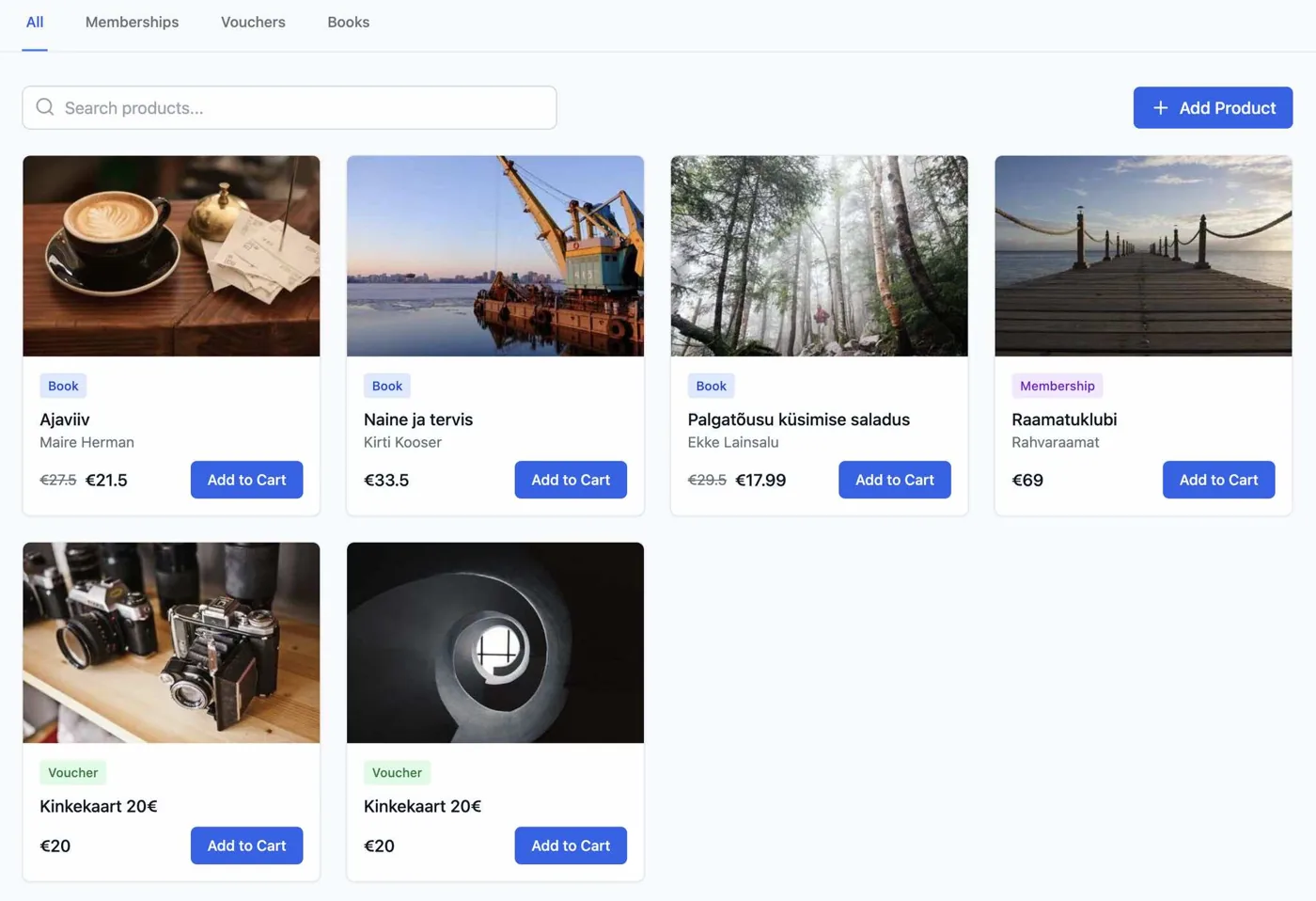
January 2025 marked the moment when Perxify moved from concept to working reality. After months of building and refining, we released our first marketplace platform demo for a serious client who wanted to launch their onchain reward program with us. This is the story of how we built the technology that would transform commerce, the breakthrough conversation that reshaped our vision, and the demo that proved our platform could work in the real world for building a multi-vendor marketplace with a headless architecture.
The Client Conversation That Changed Everything: The Need for a Multi-Vendor Marketplace
The breakthrough came through discussions with a bookstore that sells over 200,000 books annually. They were seriously considering launching an onchain reward program with us - not a small pilot project, but a real business betting on our commerce cloud platform at scale.
What started as conversations about loyalty programs quickly evolved into something much bigger. The client became fascinated not just with the reward mechanics we could enable but with the fundamental capability that NFT technology provided: customers could trade unused benefits and rewards with one another.
Then they asked the question that would reshape our entire approach: if customers could trade their loyalty rewards and unused perks, why couldn't they also trade the physical products themselves? We had already been building a white-label marketplace for brands to enable trading of memberships and digital benefits. Could this same infrastructure handle physical goods?
The question seemed simple on the surface, but it opened up possibilities we hadn't fully considered. We weren't just building a loyalty platform anymore; we were building infrastructure for an entirely new type of commerce ecosystem where digital ownership and physical goods could seamlessly interact. As we detail in our story of building in public during the early days, this evolution from a simple concept to a comprehensive platform happened through continuous customer feedback and iterative development.
The Technical Breakthrough: Headless Architecture for Multi-Vendor Commerce
The client's vision presented us with a fascinating challenge. If we only dealt with new books sold directly through our platform, tokenization would be straightforward: create an NFT for each book at the time of purchase. But this approach would exclude millions of existing books already in circulation, dramatically limiting the marketplace's potential.
The solution we developed was both elegant and complex. Most physical goods have unique identifiers, such as ISBNs for books, serial numbers for electronics, and standardized identification systems across various categories. More importantly, there are comprehensive databases that catalog these identifiers, like the global database of published books.
This led us to our breakthrough approach: instead of tokenizing books only at the time of purchase, we would tokenize them at the time of listing. When a user wants to sell a book on our marketplace, they list it by scanning the book's barcode or entering its ISBN. Our system creates an NFT for that specific book, establishing a digital ownership record that tracks all future transactions.
This approach enables our multi-vendor marketplace platform to immediately include the entire existing ecosystem of books, not just new purchases. A customer can list a book they bought years ago from any retailer, and it becomes part of our tokenized marketplace with full ownership tracking from that point forward. We had found a way to bring the entire existing book market into the blockchain economy. As we explore in our analysis of the reality of building startups, these technical breakthroughs often come from solving real customer problems rather than pursuing technology for its own sake.
The Philosophy of Invisible Innovation
One of our core principles throughout this development was what we call "invisible innovation." The idea is that powerful technology should be completely transparent to the end user. We aren't building an NFT marketplace because we love blockchain technology; we're using it to enable new types of experiences and relationships that aren't possible with traditional systems.
This philosophy guides every aspect of our user experience design. Users don't need to understand wallets, gas fees, or smart contracts. They don't need to know they're creating or trading NFTs. They need to experience a marketplace that's more flexible, more rewarding, and more connected than anything they've used before.
The technical architecture we built is sophisticated, running entirely on the Polygon network and utilizing Reservoir tools for marketplace functionality at the time. Everything is onchain, providing the transparency and ownership benefits of blockchain technology while hiding the complexity behind familiar interfaces. We even tested integrating NFT-based ownership directly into Apple and Google Wallets, meeting users where they already are rather than asking them to learn new systems.
Multi-Vendor Marketplace Functionality That Actually Works
As we developed the platform, its functionality evolved rapidly to meet the demands of real-world commerce. What started as a simple trading mechanism grew into a comprehensive marketplace ecosystem that impressed even us as we built it.
The core functionality includes browsing offers from other users, listing items by simply scanning a QR code or barcode, sending purchased items to friends as gifts, and handling all the logistics of shipping physical products. Each capability might sound straightforward, but implementing them in a blockchain-based system while maintaining a seamless user experience requires solving numerous technical challenges.
The QR code scanning feature became particularly elegant. Users can list any book for sale by simply scanning its barcode with their phone camera. Our system automatically pulls product information from global databases, creates the NFT ownership record, and lists the item on the marketplace. The entire process takes seconds and requires no technical knowledge from the user.
The shipping integration is equally sophisticated. When a user purchases a physical item, our system automatically generates shipping labels, coordinates with logistics providers, and provides tracking information to both buyer and seller. The blockchain ownership transfer coincides with the physical shipment, ensuring that digital and physical ownership remain synchronized.
All of this happens while the underlying technology remains hidden in the background. Users don't need to know they own wallets that create interconnected customer profiles or use NFTs that enable much more asset fluidity. They experience a marketplace that works better than anything they've used before.
Building Connected Commerce Communities
As the marketplace functionality came together, we began to see the broader possibilities of what we were building. This wasn't just about buying and selling books more efficiently; it was about creating entirely new types of communities and experiences centered around shared interests.
Imagine the possibilities when combined with a recommendation engine, reward programs, and community-building tools. Taking the book example further - what if you could build book clubs using a platform that knows your club's personalities, interests, reading history, and book ratings and, based on that, suggests the next books to read?
The platform could find the best offers from vendors that reward you the most, ship books to all members, and later enable easy resale if members no longer want to keep them. The same concept could be applied to fashion and luxury goods, culinary experiences, travel vouchers, and countless other categories. The possibilities seem endless!
Meanwhile, brands would gain valuable insights into how to retain their best customers and serve them better - a fair deal in my book. This isn't about more invasive data collection; it's about voluntary, value-driven information sharing that benefits both parties.
What makes this particularly exciting is the data advantage our approach provides. Because every transaction and interaction is recorded onchain, we can offer insights about customer behavior, product performance, and market trends that aren't available through conventional platforms. Brands can understand not only what their customers buy but also how they use products, what they value, and how they connect with other customers.
The Infrastructure Magic Behind the Scenes: The Headless Advantage
While the user experience is designed to be intuitive and straightforward, the technical architecture requires solving several complex challenges that existing platforms haven't addressed.
We need a hybrid onchain/off-chain architecture that stores ownership and transaction data on the blockchain while keeping product metadata and images off-chain for improved performance. This requires careful coordination between different data layers and ensuring consistency across all systems.
We must integrate blockchain ownership with real-world logistics and shipping, thereby building bridges between digital ownership transfers and physical product movement. This ensures the two remain synchronized even when dealing with multiple shipping providers and international transactions.
We need to abstract away all the complexity of blockchain interactions while still providing the benefits of decentralized ownership. Users shouldn't worry about gas fees, wallet management, or interacting with smart contracts, but they should still benefit from actual digital ownership and transparent transaction history.
We're implementing additional enhancements on the infrastructure side, as well as all the data collection and AI marketing assistant functionality that integrates with the bookstore's backend. But the gist is that by utilizing NFTs, we can quickly launch a marketplace for physical goods. Once it's proven with books, we can enable any other business in any industry to do the same via Perxify.
Platform Scalability Across Industries
The success of our demo and the serious interest from our bookstore client represent more than validation. They were proof of concept for a platform that can be replicated across industries. We aren't building a custom solution for one bookstore; we're building infrastructure that can be adapted for any category of physical goods.
This scalability is enabled by our modular architecture and blockchain foundation. The same smart contracts and marketplace infrastructure that works for books can be adapted for other categories with minimal modification. The tokenization logic, ownership tracking, and trading mechanisms are category-agnostic.
While our demo focused on books, the same infrastructure could serve fashion, electronics, collectibles, home goods, and countless other categories. Books are an excellent starting point because they have standardized identifiers (ISBNs), well-established condition grading systems, and strong community aspects that make secondary markets valuable.
Each category has unique requirements - fashion items require detailed condition descriptions and photos, electronics necessitate warranty and functionality verification, and collectibles necessitate authentication and provenance tracking. However, the underlying e-commerce platform infrastructure can adapt to serve all these needs.
The user interface components are designed to be white-labeled and customized for different brands and industries. A fashion marketplace would look and feel completely different from a book marketplace, but they would share the same underlying infrastructure and capabilities.
Client Validation and Market Proof
Having a major brand with over 200,000 annual book sales seriously considering our platform provided incredible validation for our approach. This wasn't a pilot program or experimental implementation - this was a real business evaluating whether to bet on our technology for their customer relationships.
The client's enthusiasm for NFT tradeability prompted us to think beyond traditional e-commerce paradigms. They saw the potential for creating new business models around secondary markets, community building, and data insights that aren't possible with conventional platforms.
This validation gave us the confidence to think bigger about other industries and use cases. If our approach can work for books - a category with complex metadata, varied conditions, and strong community aspects - it can work for almost any category of physical goods.
The client also helped us understand the importance of the complete ecosystem we were building. They weren't just interested in the marketplace functionality; they were excited about the integrated CRM, analytics, and marketing tools that would help them better understand and serve their customers.
Witnessing our marketplace in action and engaging in serious discussions with a major client confirmed that our vision was even bigger than we had initially thought. We aren't just building a more efficient way to buy and sell products - we're building infrastructure for entirely new types of business models and customer relationships.
The Foundation for Future Growth
The marketplace demonstration we built in January 2025 became the foundation for everything we would build afterward. The technical capabilities we developed, from tokenization to secondary markets, QR code listing, shipping integration, and community features, became core components that could be adapted and extended for new use cases and industries.
The client validation we received gave us the confidence to expand our vision and build additional platform capabilities. The success of our demo with books would lead to implementations in other categories, each building on the same core infrastructure while adapting to category-specific requirements.
The data insights we generate from marketplace activity inform our AI development and help us build more sophisticated recommendation and marketing tools. Real customer behavior data is far more valuable than any theoretical models we could develop.
Most importantly, the marketplace demonstration proved that our vision of connected commerce was not just technically possible but commercially viable. We had created something that customers would want to use, businesses would want to implement, and communities would want to build around.
January 2025 marked the moment when Perxify transitioned from concept to working demonstration. The demo proved the vision, the technology showed its potential, and the future of commerce began to take shape. We were just getting started, and the possibilities seemed truly endless.
2025 had started amazingly, and this is only the beginning of what will become a transformative year for commerce, community, and connection. Our comprehensive platform continues to evolve, enabling businesses to create the kind of connected commerce experiences that were previously impossible.

Hands-on product, business and AI leadership for executives of established companies. Working on agentic commerce through OfferSignal.
About Sander