This article was originally published on Medium. The link below opens the original publication in a new tab.
MediumPreviously, I asked: Where are Estonia’s Furniture1 and BURGA?
We have great tech companies. Good manufacturers too. Yet Estonia’s side of that particular map lacked businesses using technology to sell physical products at €100M+ annual revenue.
The comments raised useful questions. Business models? Proximity to Poland and Germany? Management, sales, or how we collaborate?
Innovation alone cannot explain the gap. Neither can funding.
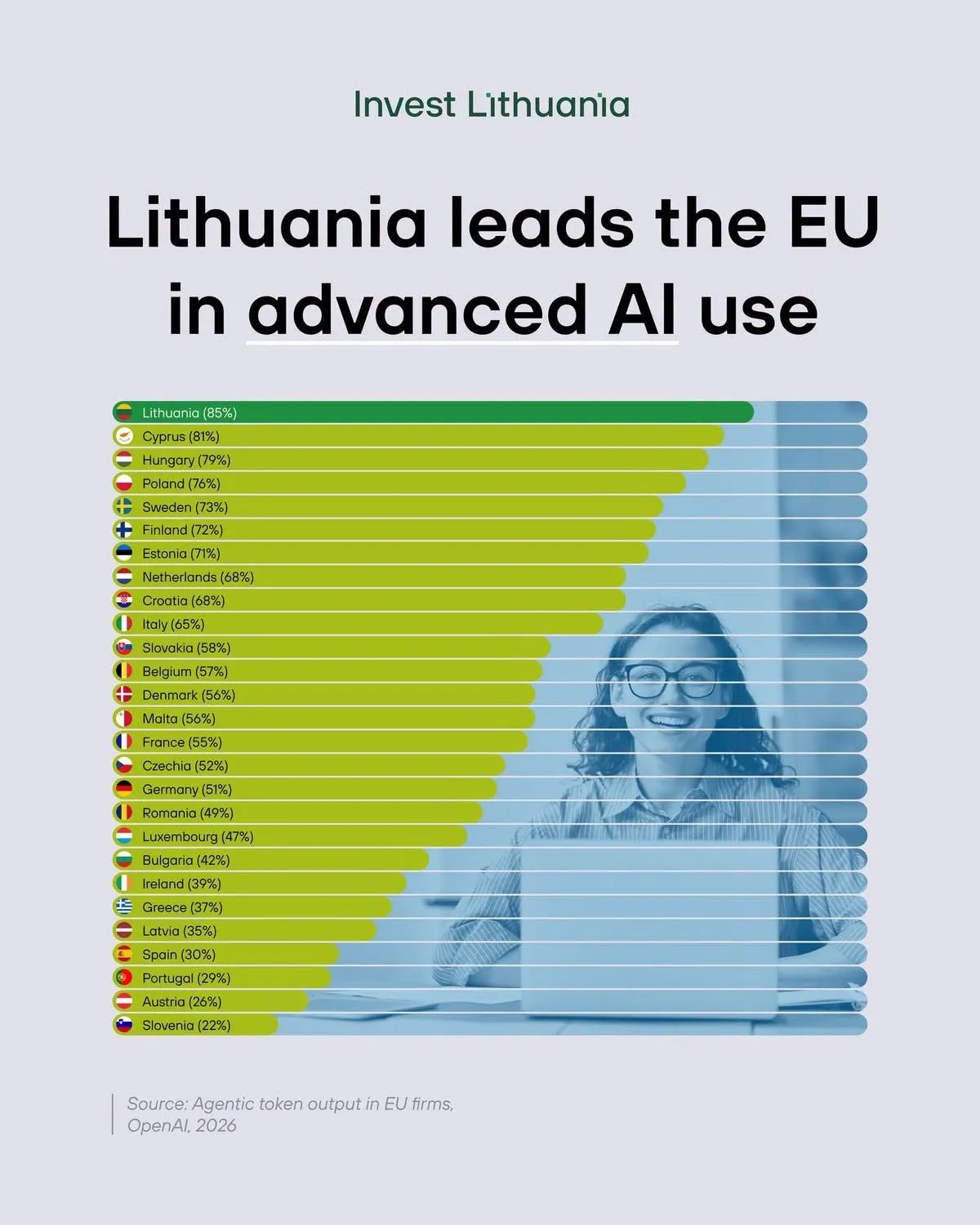
Then I came across another graphic.
In OpenAI’s September 2026 comparison, Lithuania ranked first in the EU for the agentic share of AI output. Estonia ranked seventh, behind Cyprus, Hungary, and Poland, among others.
Lithuania: 85%. Estonia: 71%. Germany: 51%.
To be clear, this measures the share of output tokens generated through agentic tools in the ChatGPT Enterprise and Business accounts analysed. Not the percentage of companies using AI. Estonia’s result is strong, but the gap is still 14 percentage points.
That said, this does not explain how Lithuania’s €100M+ businesses were built. We need to learn what actually worked. AI is one possible tool for building the next ones.
Are we going to let Lithuania pull further ahead?
One observation from the discussion stood out to me. Building a substantial business does not always require inventing something new. Sometimes it means selling and delivering familiar products well. Across Europe.
Furniture. Clothing. Cosmetics. Beauty and wellness products.
We make good products as well. But a good product does not automatically create international sales.
Are we weaker at building brands? Or good at manufacturing while leaving the customer relationship to someone else?
Contract manufacturing is not a bad business. But we could test more ways to sell internationally, independently or together with other producers.
This is where technology could help.
First, understand what you offer. Products, variants, prices, availability, and delivery terms. Make that information usable internally and, where appropriate, accessible to buyers’ agents.
Your own salesperson should not need three phone calls to prepare a quote.
Then connect it to actual work. An agent helps prepare a quote, find a suitable product, or process an order. A person reviews and approves.
With the right integrations, more of this work can be requested in plain language. Less memorising menus. More getting things done.
BUT! A text box will not fix a messy price list or a broken process.
It still starts with management. Make the decision. Get the data right. Test one real workflow. Measure whether quotes go out faster and buying becomes easier.
Not simply using more AI. Selling more good products.

Hands-on product, business and AI leadership for executives of established companies. Working on agentic commerce through OfferSignal.
About Sander