This article was originally published on Medium. The link below opens the original publication in a new tab.
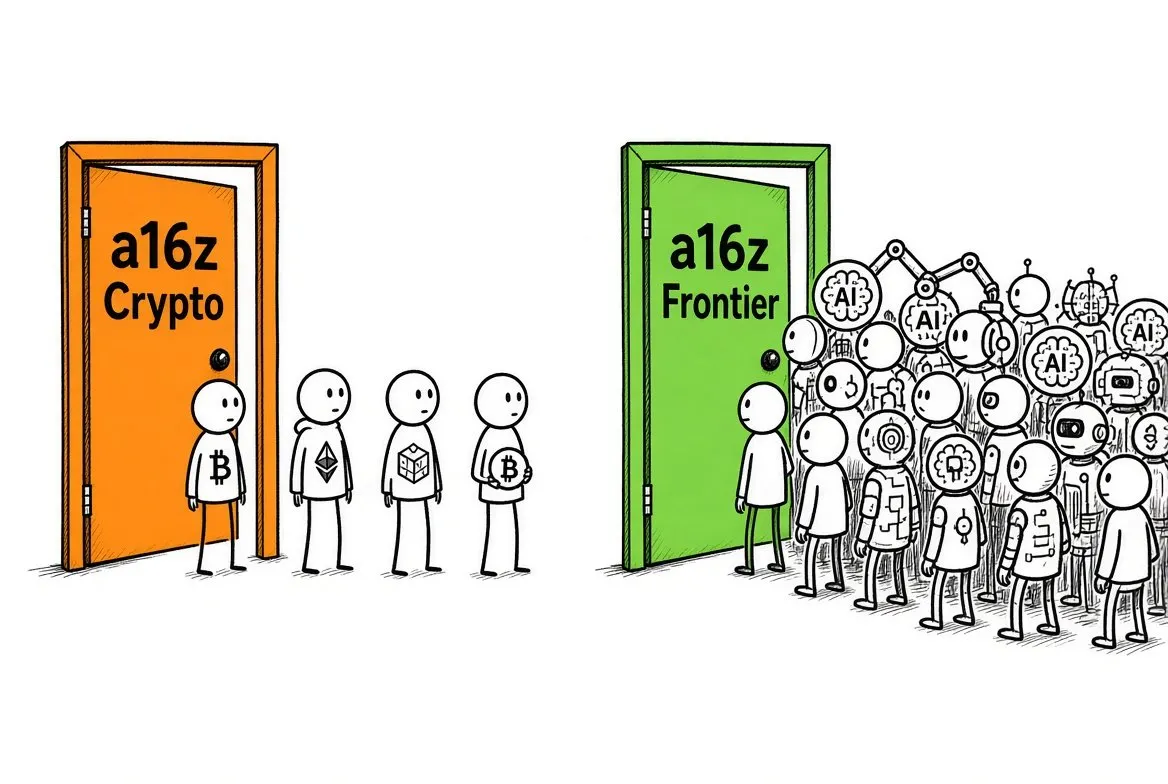
MediumSome thoughts on a16z Crypto becoming a16z Frontier.
I’ve spent most of my life working with new and complex technologies. Smart supply chains. Autonomous robots. Space tech. AI. Peer-to-peer networks.
After selling Shipitwise, building logistics infrastructure on distributed technologies seemed sensible. It was the golden age of DeFi and NFTs.
Distributed systems promised direct information exchange between companies without a central intermediary. IBM and Maersk were building TradeLens along similar lines.
Then came two blows.
First Luna.
Then FTX.
Other problems damaged the sector’s reputation too. Web3 sounded better than crypto, but a different name did not restore trust or fix bad business models.
Europe also introduced MiCA. That did not end crypto. But in my view, by the end of 2023, much of the original promise, removing intermediaries and returning money and power to people, had run its course.
The technology did not disappear.
Instead, it started blending into the broader tech landscape.
Prediction markets like Polymarket and Kalshi gained attention. They work differently, but users care about what they can do. Not the infrastructure underneath.
Businesses kept experimenting with product provenance, loyalty programmes, priority purchase rights and programmable money. Some found real uses. Others are still looking.
Yet calling every such solution a crypto project makes less sense. Not every business using the internet is an internet company.
This is why a16z’s name change makes sense to me.
To be clear: they are not stopping crypto investments. Chris Dixon said that explicitly. They are expanding their focus.
Crypto became too narrow a label. Frontier also covers new devices, autonomous machines, and entirely new products and markets enabled by AI.
Investment firms have outgrown web, mobile, SaaS and fintech specialisations before. Some are now outgrowing crypto as a standalone category.
Not necessarily the technology. The category.
AI agents buying compute. Credit and energy markets on public blockchains. Programmable money. Still very much relevant.
But calling them crypto tells us little about what is being built or whose problem it solves.
For me, that is the shift. Define a business by what it does. Not just the technology it uses.
Interesting times. But attention is moving on.
Beyond the next AI model or infrastructure layer. Towards what they make possible for the first time.
Not just doing old things faster. Doing genuinely new things.
For the same reason, we’ve spent the past two and a half years helping businesses use their data to grow sales. Making buying easier for customers. Making internal processes smarter.

Hands-on product, business and AI leadership for executives of established companies. Working on agentic commerce through OfferSignal.
About Sander