This article was originally published on Perxify. The link below opens the original publication in a new tab.
PerxifyHow Perxify evolved from a simple loyalty program idea into a comprehensive commerce platform throughout 2024.
The late summer and early fall of 2024 marked a pivotal period for Perxify. What started as a simple loyalty platform concept rapidly evolved into something much more comprehensive - a complete transformation of how brands and customers interact. This is the story of that evolution, captured in real-time as our vision expanded and our understanding deepened.
How did Perxify evolve from concept to platform in 2024?
Perxify evolved from a simple loyalty platform concept to a comprehensive commerce cloud platform-as-a-service (PaaS) in 2024. This transformation was driven by customer feedback revealing that brands needed complete customer engagement solutions, not just loyalty programs.
From Concept to Platform-as-a-Service
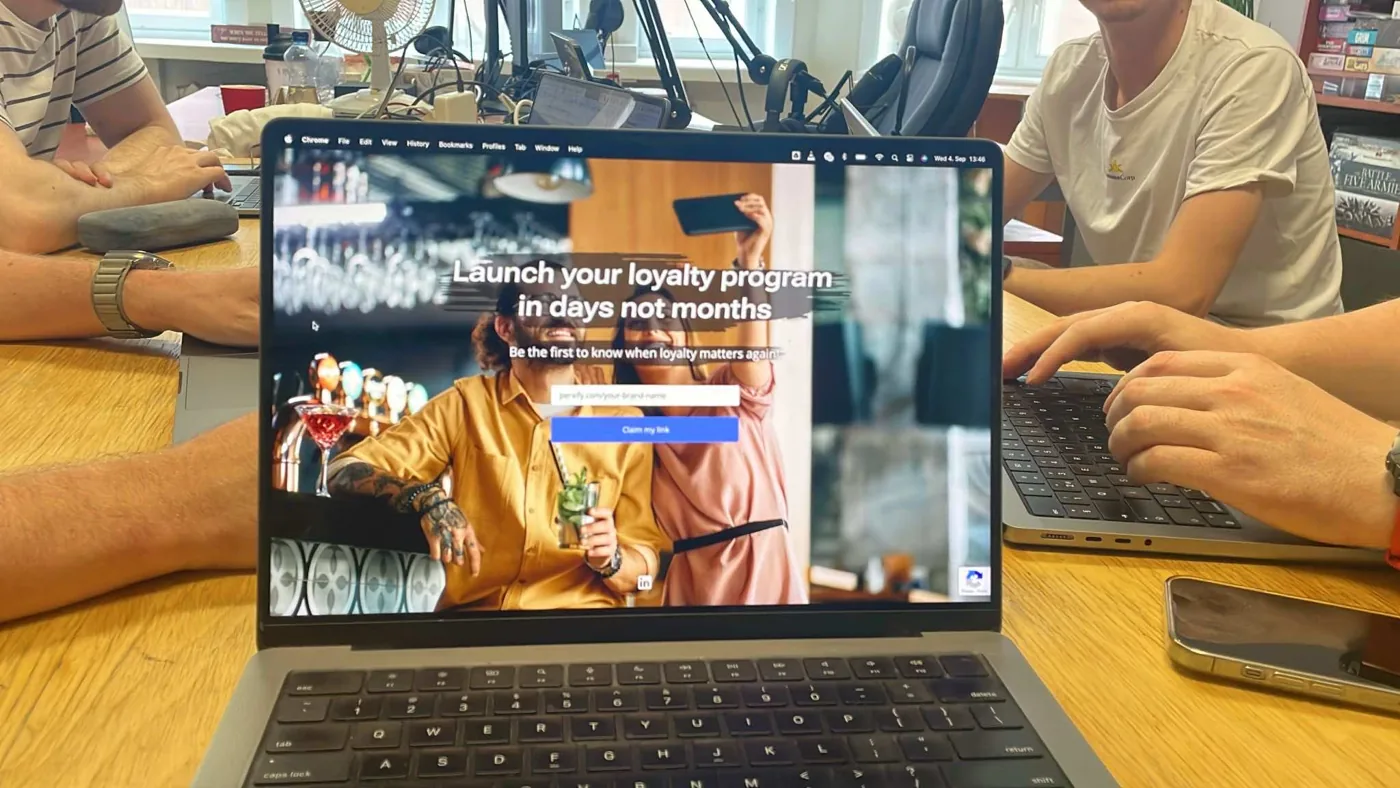
By August 2024, we were gearing up to launch the Perxify demo, with our first brands coming on board. But what we were building had evolved far beyond our initial concept. Over the past year, numerous brands had sought our expertise in leveraging cutting-edge technologies to enhance customer value, and we had learned something crucial: they weren't just looking for another loyalty platform - they needed a complete transformation of their customer engagement strategy. As we detail in our story of fifteen years of journey leading to Perxify, this realization was the culmination of years of experience in e-commerce and customer relationship building.
Recognizing the evolving behavior of buyers, brands understood the necessity of upgrading their communication and reward strategies to foster genuine customer loyalty. However, when they examined existing market solutions, they encountered the same limitations we had identified: everything required extensive custom development, significant resource investment, and rarely delivered meaningful revenue increases.
This realization led us to develop what we called a "game-changing solution" - Perxify as a modular loyalty program platform-as-a-service (PaaS). Our approach integrated user-friendly experiences with innovative technologies, empowering brands to boost client revenue and adapt to evolving customer needs without the traditional barriers of complexity and cost.
The platform we envisioned would enable brands to swiftly launch loyalty programs, access comprehensive customer analytics, and experiment with new features seamlessly. We would streamline the loyalty program setup by offering white-label solutions and data control, ensuring brands could stay competitive in an increasingly dynamic market.
The Five Pillars of Our Platform
As we refined our vision, five core capabilities emerged that would define our Loyalty Platform and distinguish it from everything else in the market:
-
Rapid Program Launch: Brands could introduce new loyalty programs and perks without the traditional development cycles and technical complexity.
-
Advanced Pre-selling: The ability to pre-sell tiered packages to both existing and new customers, creating new revenue streams and more profound customer commitment.
-
Comprehensive Analytics: Full analytics and smart insights on customer behavior that went far beyond traditional loyalty program metrics.
-
Personalized Experiences: Delivery of personalized experiences and communication channels that could adapt to individual customer preferences and behaviors.
-
Seamless Feature Testing: The ability to exchange and test new features without involving engineers or marketers, democratizing innovation within organizations.
But what made our approach truly revolutionary was the underlying technology. By keeping the crucial parts onchain, we could provide safe opportunities for loyal customers to exchange unused rewards and earn meaningful fees on their referrals - all without having to "make their hands dirty with crypto, wallets, and other power tools (unless they want to)."
This principle of hiding complexity became central to everything we built. We were utilizing cutting-edge technologies - NFTs, smart contracts, wallets, and AI - but we were hiding all of this under the hood so no one would have to know about it, not even the investors. As we explore in our analysis of the technical reality of Web3 building challenges, successfully implementing blockchain technologies requires careful consideration of user experience and complexity management.
What are the five pillars of Perxify's loyalty platform?
- Rapid Program Launch - Introduce new loyalty programs without traditional development cycles
- Advanced Pre-selling - Pre-sell tiered packages to create new revenue streams
- Comprehensive Analytics - Full analytics beyond traditional loyalty program metrics
- Personalized Experiences - Adaptive communication channels for individual preferences
- Seamless Feature Testing - Test new features without involving engineers or marketers
The Custom Development Problem
As summer ended and our developers geared up for launch, we gained a deeper understanding of why existing solutions weren't working. The fundamental issue was that customer loyalty programs were always handmade, from concept to execution, and the gains from such custom development were minuscule compared to the investment required.
Yes, there were various reward management platforms and loyalty card software providers in the market. But most expected companies to invest significant resources just to get started, and even after that substantial investment, they rarely helped companies boost revenues or provide innovative and fulfilling offers to customers.
The landscape was changing, though. With evolving customer expectations and technological advancements, businesses have begun experimenting with novel concepts that have shown early success in driving new revenue. Some of our favorite examples included allowing customers to collect tradable memories from experiences, earn loot boxes with unique rewards, and even resell unused products via safe platforms.
Yet most such innovative tests involved even more custom work, creating a paradox where the most promising approaches were also the most resource-intensive and risky to implement.
After consulting with too many brands about best practices and introducing them to solutions that didn't entirely work, we made a crucial decision: we would build a proper commerce cloud platform that eliminated the need for involving expensive engineers and marketers while being super simple to use - so simple that "all of our moms could get going without our hand-holding."
This became our usability north star. If it weren't simple enough for a non-technical person to use effectively, we wouldn't have achieved our mission.
The Mobile Milestone and Market Validation
By mid-September, we achieved a significant milestone: our live demo was successfully running on mobile devices. This wasn't just a technical achievement - it represented our transition from theoretical concepts to something that actually worked in the real world, something we could show to potential clients instead of just describing.
The mobile functionality was crucial because it demonstrated that our platform could deliver the seamless user experience we had promised. Customers wouldn't need to understand blockchain technology or navigate complex interfaces; they could interact with tokenized loyalty programs as easily as they use any other mobile app.
With the core functionality proven, our focus shifted to the final touches: refining content and design to ensure the experience was not only functional but also engaging and intuitive and conducting comprehensive bug testing to deliver the seamless experience our early clients expected.
The excitement was building. We were on the brink of onboarding our first real clients, and this felt like more than just a product launch - it was a leap toward revolutionizing how businesses could boost their revenue through loyalty programs.
Market validation was coming from multiple directions. Eager businesses were asking daily when they could go live, and the interest wasn't just from small startups - established brands were recognizing that they needed new approaches to customer engagement in an increasingly competitive landscape.
The Tokenization Revolution
As we approached October, our vision crystallized around a revolutionary concept: loyalty programs where rewards were more than just perks - they were assets that could be appreciated and traded by customers. This wasn't just an incremental improvement; it was a fundamental reimagining of the relationship between brands and their customers.
The inspiration came from successful examples like airBaltic and MetaBrewSociety, which pioneered the concept of selling "membership cards" to loyal customers. These cards provided daily to quarterly rewards - free flights or boxes of beer - but the real innovation wasn't in the membership model itself.
The true novelty was tokenization. By tokenizing their loyalty programs and rewards, these brands allowed customers to trade their unused rewards. When a customer received a voucher for a free flight or beer they couldn't use within the set timeframe, they could list it on a safe marketplace and receive genuine cash instead.
This created value for everyone involved. Customers got flexibility and real value from their rewards. Brands gained detailed data about program effectiveness and customer behavior. And the marketplace transactions generated additional revenue streams through fees.
But the implications went far beyond individual transactions. Tokenized assets, such as reward vouchers, were individually trackable, providing brands with actual data on whether their loyalty programs were effective and led to revenue increases. When combined with proper analysis, brands could adjust their programs to offer better rewards or provide hyper-personalized offers.
What is tokenization in loyalty programs?
Tokenization in loyalty programs allows rewards to become tradeable assets that customers can exchange or sell. This creates real value for unused rewards, provides brands with detailed program effectiveness data, and enables new revenue streams through marketplace transactions.
Building the Ecosystem
Our vision extended beyond individual brand programs to encompass an entire ecosystem of interconnected loyalty experiences. Once brands understand their customers better through tokenized interactions and comprehensive analytics, they can share relevant data with partners to set up collaboration projects where both sides know what they will gain before launching a campaign.
This ecosystem approach would enable cross-brand collaborations, shared customer insights, and new forms of partnership that simply weren't possible with traditional loyalty programs. Customers could earn rewards from one brand and use them with partners, creating a network effect that benefited everyone involved.
We were also dedicated to fostering collaborations with third-party developers to cultivate this interconnected product ecosystem. By providing APIs and development tools, we could enable rapid expansion and innovation beyond what our core team could build alone.
The technology for all of this was already available, but it wasn't simple enough for mass adoption. Companies had to build bespoke solutions using technologies and platforms designed for "crypto natives" who understood how to interact with raw concepts, such as dApps, NFTs, and wallets.
While this approach had worked for some early adopters, it didn't enable companies to scale these concepts to all their users. Our mission was to change that by abstracting away the complexity while preserving the power and flexibility of the underlying technology.
The Launch Strategy and Beyond
Our launch strategy reflected the evolution of our thinking. Starting in October, we would begin onboarding the first brands, each selling "membership cards" that promised daily to quarterly rewards. But this was just the beginning - the foundation for a much larger vision.
We were preparing to unveil tools for in-depth analysis and cross-brand collaborations that would transform loyalty from a cost center into a dynamic ecosystem, generating new revenue streams and deeper customer relationships.
The goal was elegantly simple: allow every company to set up its loyalty program, start issuing rewards, and test various new ideas with the help of powerful analytics and insights. More specifically, it increases revenue while making their most loyal customers happier.
This simplicity was deceptive, though. Behind the easy-to-use interface lay a sophisticated loyalty platform that leveraged blockchain technology, artificial intelligence, and advanced analytics to create experiences previously impossible with traditional approaches.
The Evolution of Vision
Looking back at this period, the evolution of our vision follows a clear trajectory that reflects our deepening understanding of the market and the possibilities that our technology enables.
We started in August with a modular loyalty platform designed to make it easy for brands to launch programs. By September, we had realized that the bigger problem was that all existing solutions required custom development and didn't drive meaningful revenue. By October, we had articulated a complete vision for tokenized, tradeable rewards that would create entirely new business models.
Each stage was built upon the previous one. Still, the scope continued to expand as we gained a deeper understanding of the market and recognized the possibilities that our technology would enable. We weren't just building features; we were building new business models. We weren't just solving today's problems; we were anticipating tomorrow's opportunities.
The excitement and optimism during this period were genuine, but it was also informed by months of hard work, customer conversations, and technical problem-solving. We weren't just dreaming about the future; we were building it, one feature and one customer conversation at a time.
The Foundation for Everything That Followed
These months, from August through September 2024, laid the conceptual foundation for everything we built afterward. The core ideas - modularity, simplicity, tokenization, and revenue focus - became the pillars of our platform and guided every subsequent decision.
More importantly, they established our approach to innovation: take powerful but complex technologies and make them accessible to everyone. Don't just build another loyalty platform; reimagine what customer relationships could look like in a digital-first world.
The vision we articulated during this period proved remarkably durable. Even as we encountered unexpected challenges and had to adapt our technical approach, the fundamental concepts remained constant. That's the power of having a clear vision: it guides you through inevitable challenges and changes, helping you stay focused on what really matters while remaining flexible about how to get there.
Looking back, I'm struck by how much we got right in these early articulations. The commerce cloud platform we eventually built closely resembles what we envisioned in September 2024, even though the path to get there was much more complex than we anticipated. The evolution from concept to platform wasn't just about building software - it was about reimagining an entire industry and our role within it.

Hands-on product, business and AI leadership for executives of established companies. Working on agentic commerce through OfferSignal.
About Sander