This article was originally published on Medium. The link below opens the original publication in a new tab.
MediumWe have spent the last 30 years building tech companies. In Estonia alone, we have plenty to be proud of: two exits of Skype; the IPO of Wise; capital raises of Pipedrive, Bolt, Veriff, and others. But how much of that effort has affected the larger business environment?
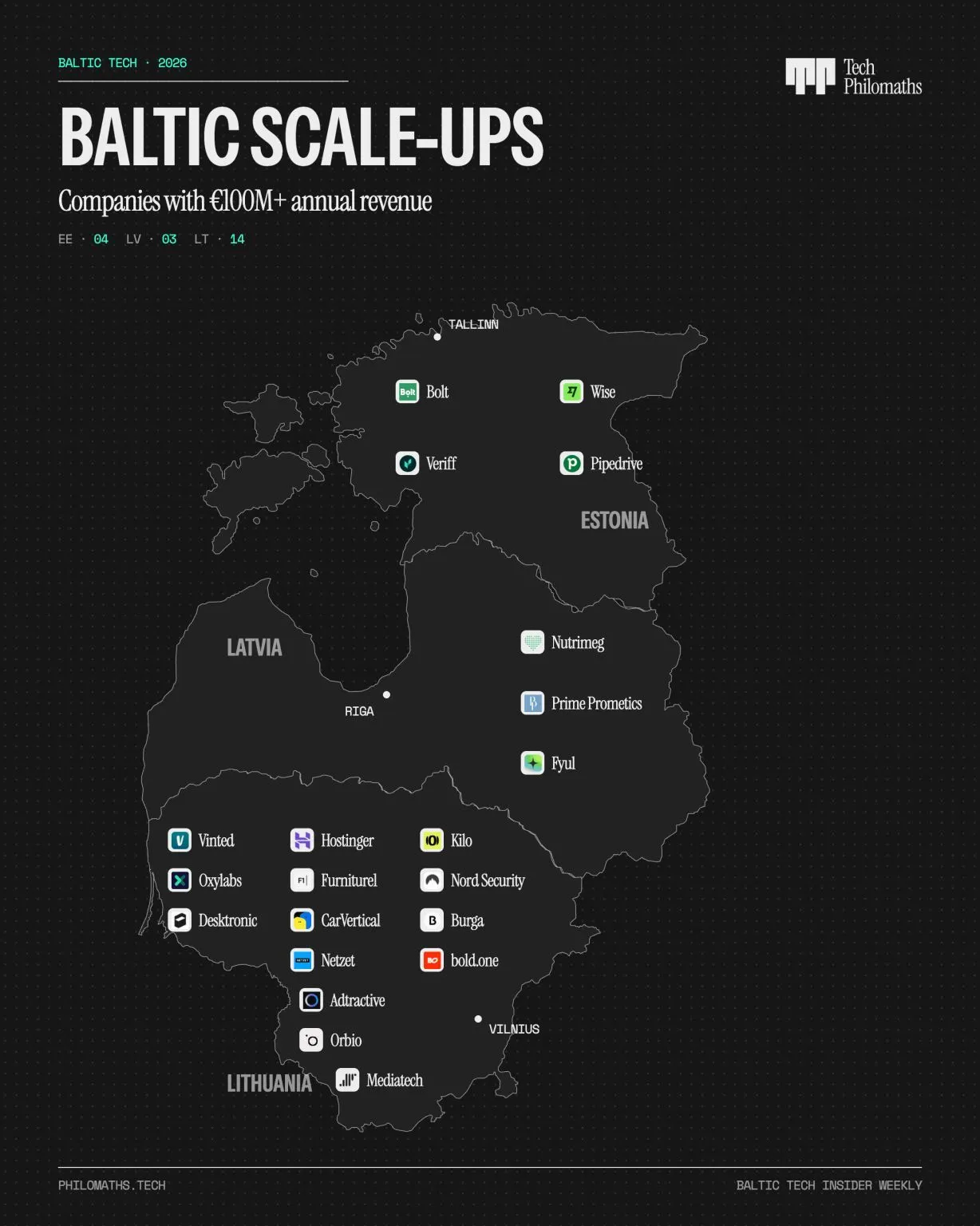
On Saturday, I saw this Baltic scale-up graphic, and it made me look south.
More so, I started thinking: where are our equivalents for Furniture1 and BURGA? Businesses using technology to reach €100M+ in annual revenue with product-led strategies.
They are absent from Estonia’s side of this particular map. Bolt connects to commerce through Bolt Food, but that’s only a minor part of their larger business.
That said, congrats to the Lithuanian founders and teams. You’ve managed to beat us in this, even when you have fewer unicorns per capita.
This graphic raises a useful question: have we been better at building technology businesses than helping existing businesses grow through technology?
I suspect this question matters across Europe. Especially now that the economics of software are changing as people are able to build their own tools via vibe coding. Yes, those tools might not be secure or fully functioning at all times. However, as of now, software functionality alone has become harder to defend.
I bet that future €100M+ software businesses will increasingly need something beyond the code. Proprietary data. Network effects. A physical component. Capital or regulatory barriers. Something another agent cannot simply reproduce.
For ambitious manufacturers and product brands, that creates an opportunity.
They already have things software cannot generate on demand: good products, production expertise, supplier relationships, and the ability to deliver.
But adopting AI cannot mean adding a chatbot to the same old website.
It means making product information machine-readable. Keeping specifications, variants, prices, availability, and delivery terms consistent. Investing in SEO and testing visibility in AI-generated answers. Where useful, it also means connecting agents to live product databases and purchasing workflows, through MCP or other integrations. Not letting a chat window guess what is in stock.
None of this guarantees a recommendation or a sale.
The point is not to turn every manufacturer into a software company.
It is to use technology to sell better products to more customers, internationally.
Lithuania has shown that substantial businesses can be built this way. Estonia should pay attention.

Hands-on product, business and AI leadership for executives of established companies. Working on agentic commerce through OfferSignal.
About Sander